
Access Power Solutions
Off-Grid Cabin & Backup Power: Solar, Batteries & Expert Support
A complete off-grid cabin system has four parts working together: a battery bank sized to the loads you must keep running, solar charging through an MPPT controller, power conversion for your AC loads, and correctly sized protection and fusing.
Who is this for?
Small cabins, sheds and remote buildings
Lighting, device charging, a pump and a modest AC load or two, part of the year.
Regular off-grid use
Lived in for stretches at a time, so the system carries real daily loads through ordinary weather.
Remote property and critical backup
Power that has to be there when nobody is watching: freezers, well pumps, comms.
What does a complete cabin power system include?
Storage
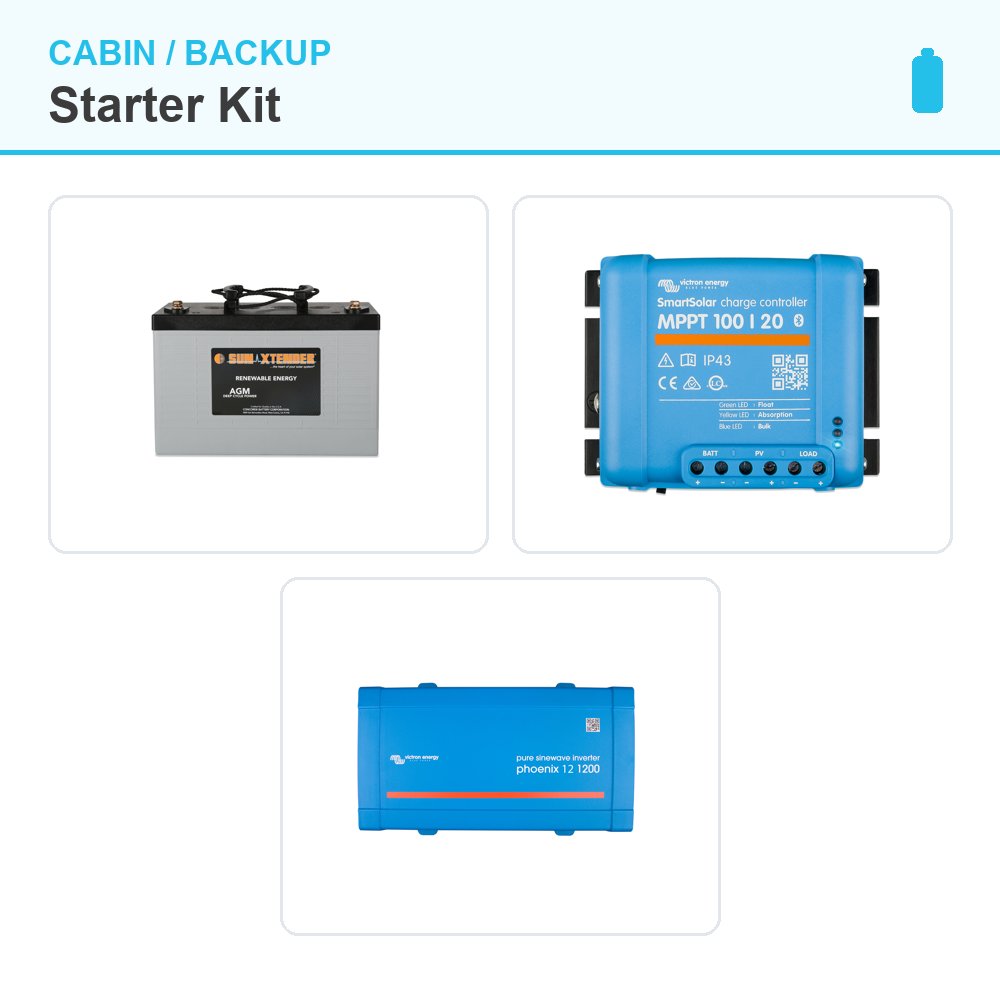
An AGM bank at starter level, lithium as capacity grows.
Solar charging
A Victron SmartSolar MPPT controller (panels sized to your site, not in the kit).
Power conversion
A Phoenix inverter for a small cabin; MultiPlus or Quattro where a generator or shore supply is managed too.
Protection
Fuses, busbars, cables and disconnects rated for the bank (not in the kit – sized to your installation).
Which kit level do I need?
Battery
12V 108Ah AGM
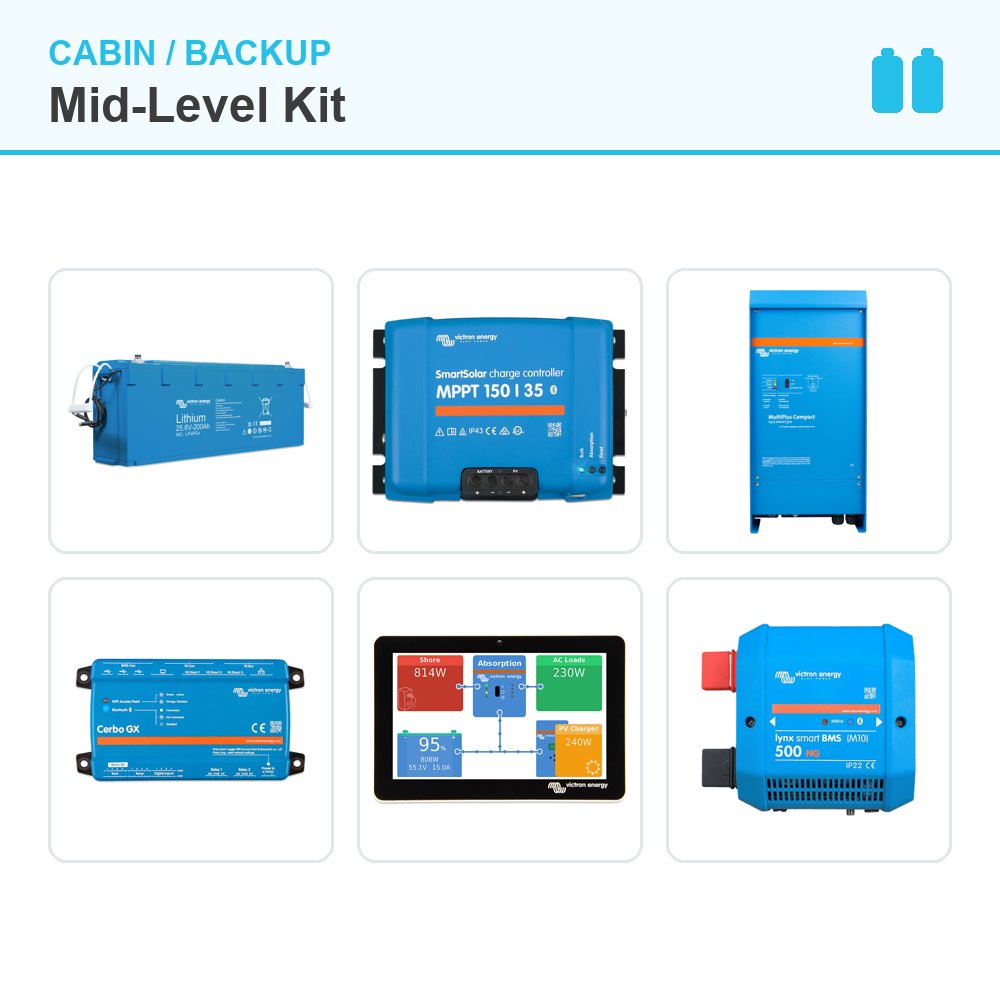
2 × 24V 200Ah NG lithium
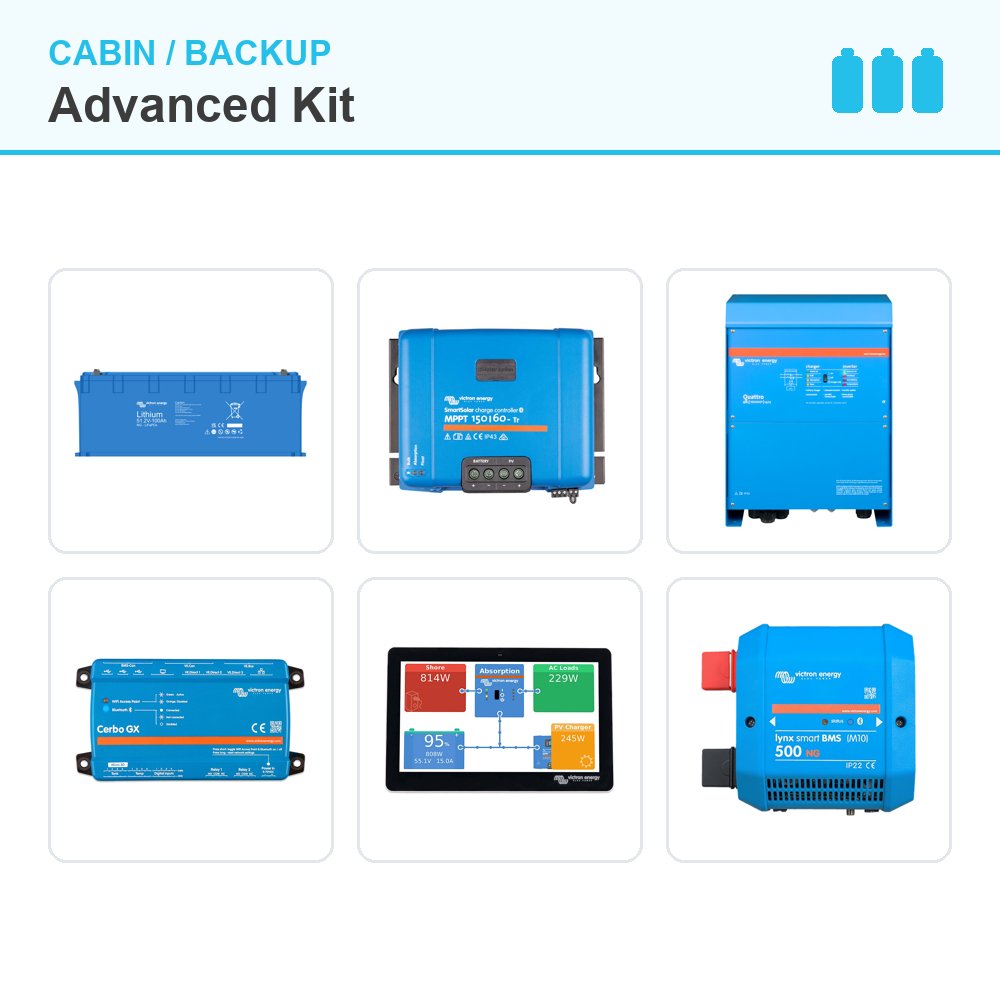
4 × 48V 100Ah NG lithium
Solar Panels
Not included — controller in the kit
Not included — controller in the kit
Not included — controller in the kit
Solar Controller
MPPT 100/20
MPPT 150/35
MPPT 150/60-TR
Power Conversion
Phoenix 12/1200 inverter
MultiPlus 24/2000 inverter / charger
Quattro 48/10000 inverter / charger
Monitoring
BMV-702 (optional)
Cerbo GX + GX Touch 50
Cerbo GX + GX Touch 70
Electrical
Sized to your installation (not in the kit)
Lynx Smart BMS 500 NG
Lynx Smart BMS 500 NG
Best For
Weekend cabin, light backup
Critical backup loads
Full-time off-grid home, remote property
Solar panels are not included in the kits; we can supply them with your system. You can ask for a free, optional review of load sizing, inverter capacity and electrical protection before you order.
Which cabin kit is right for you?
The Power Guide asks what you run, how long the building has to carry itself, and how it recharges — then points at a level, or routes you to a human review when the loads deserve one.
Frequently asked questions
They solve different problems and pair well. Batteries are silent, instant, and maintenance-free for daily cycling and overnight power; a generator is cheap bulk power for extended cloudy stretches or heavy loads. Most cabin systems we design are solar + battery with a generator as backup, sized so the generator rarely runs.
Add up the watt-hours of what you must keep running (fridge, lights, comms, pumps), then divide into the bank’s usable capacity. The Cabin Mid-Level Kit stores about 10 kWh (400Ah at 24V); a fridge (120V, or 12V through the Orion-Tr 24/12 add-on), LED lighting and device charging use roughly 1–1.5 kWh a day, so it covers several days without sun. The Cabin Starter (one 108Ah AGM) stores about 1.3 kWh, roughly half of it usable. We size backup systems to your actual loads, not averages.
Within a level, yes: you can add solar panels, or batteries of the same type, later. Moving from the Cabin Starter (12V AGM) to the Mid-Level (24V lithium) means a new battery bank and inverter / charger; the Mid-Level Kit comes complete with its own MPPT 150/35, so ask us if you want to keep your existing controller instead. If you expect to grow, tell us your 2–3 year plan and we will tell you which level to start at.
Yes. We offer off-grid remote system monitoring — battery state, solar production and faults from your phone, even for remote sites. Most Mid-Level and Advanced kits include a Cerbo GX for this; ask us about adding it to any other kit.
Yes, for the circuits you choose. A licensed electrician connects the kit’s inverter to a small critical-loads panel through a transfer switch, so the circuits you pick – fridge, lights, well pump, internet, medical devices – keep running when the grid goes down. The Cabin Mid-Level Kit’s MultiPlus 24/2000 runs about 1,600 watts at once and recharges from the grid or a generator, but it is UL 458 listed (the RV and marine standard) – many inspectors require a UL 1741 listed inverter for a house connection, which the Cabin Advanced Kit’s Quattro is. The critical-loads panel, transfer switch and electrician are not part of the kits. The Cabin Starter’s inverter is plug-in only (it cannot feed a panel). Tell us what you need to keep on in the free system review and we will size it.
Because a cold building is the one place AGM still wins. Lithium gives about 1.6 to 2 times the usable capacity per rated amp-hour and lasts far longer in daily cycling, but the Victron lithium batteries stop charging below about 41°F (5°C). An unheated cabin in winter is exactly the case where AGM’s tolerance of cold charging matters more than its weight or cycle life. As capacity and daily use grow, the mid and advanced levels move to lithium at 24V and 48V, where thinner cables and lower losses start to pay for themselves.
From the loads you must keep running, not from a product page. Add up the watt-hours of the things that cannot go dark — fridge or freezer, lighting, comms, pumps — then decide how many days without sun the system has to cover, and how it recharges when that runs out.
Read next
Still weighing a generator?
They solve different problems, and most good cabin systems use both. Here is where one stops and the other starts.