
Access Power Solutions
Marine Power Systems: Lithium House Banks, Charging & Expert Support
A complete marine power system has four parts working together: a lithium house bank sized to your actual loads, a charging strategy that works both at anchor and underway, monitoring so you always know your state of charge, and correctly sized protection and fusing.

Who is this for?
Coastal and weekend cruisers
Lights, refrigeration and electronics that last the weekend without running the engine.
Liveaboards at anchor
The boat is home. Power has to work every day, not just on good days.
Long-distance cruisers
Passages, larger banks and several charging sources that all have to agree.
What does a complete marine power system include?
Storage
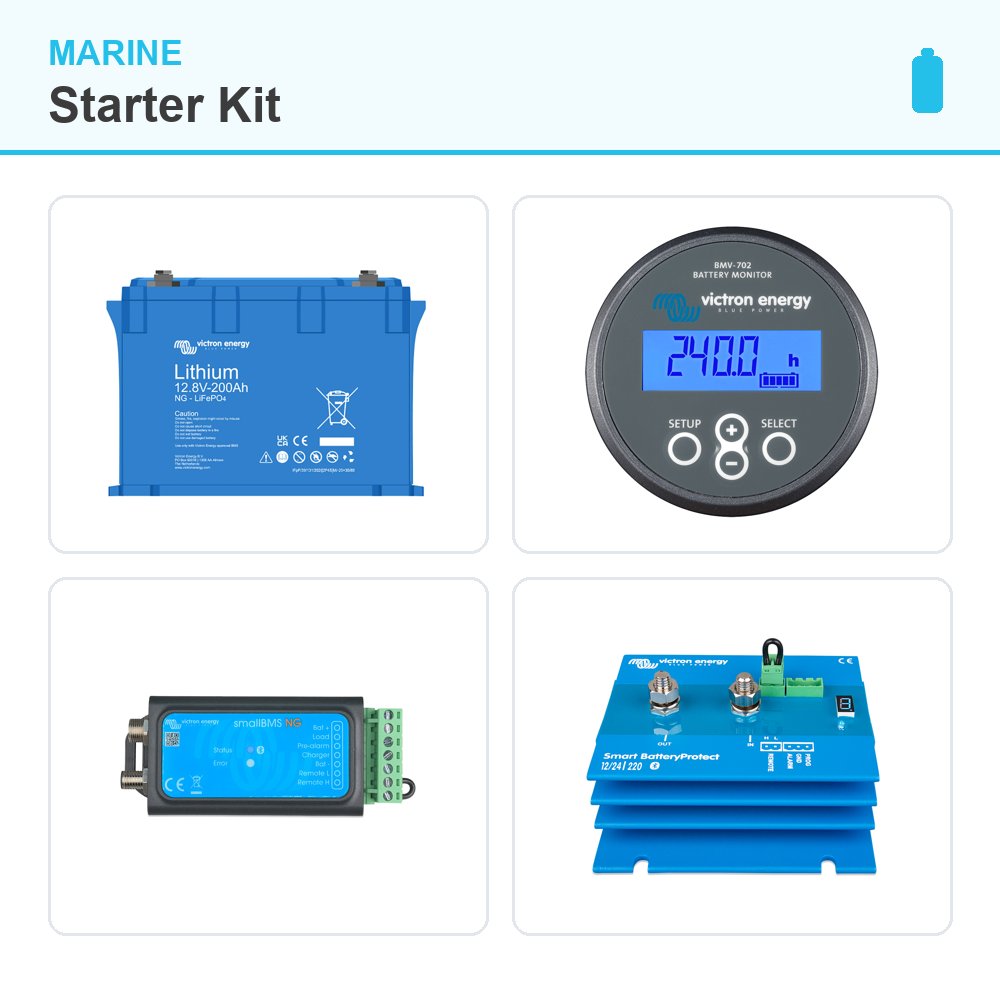
A LiFePO4 house bank, Victron 12V 200Ah Lithium NG batteries in our kits.
Charging
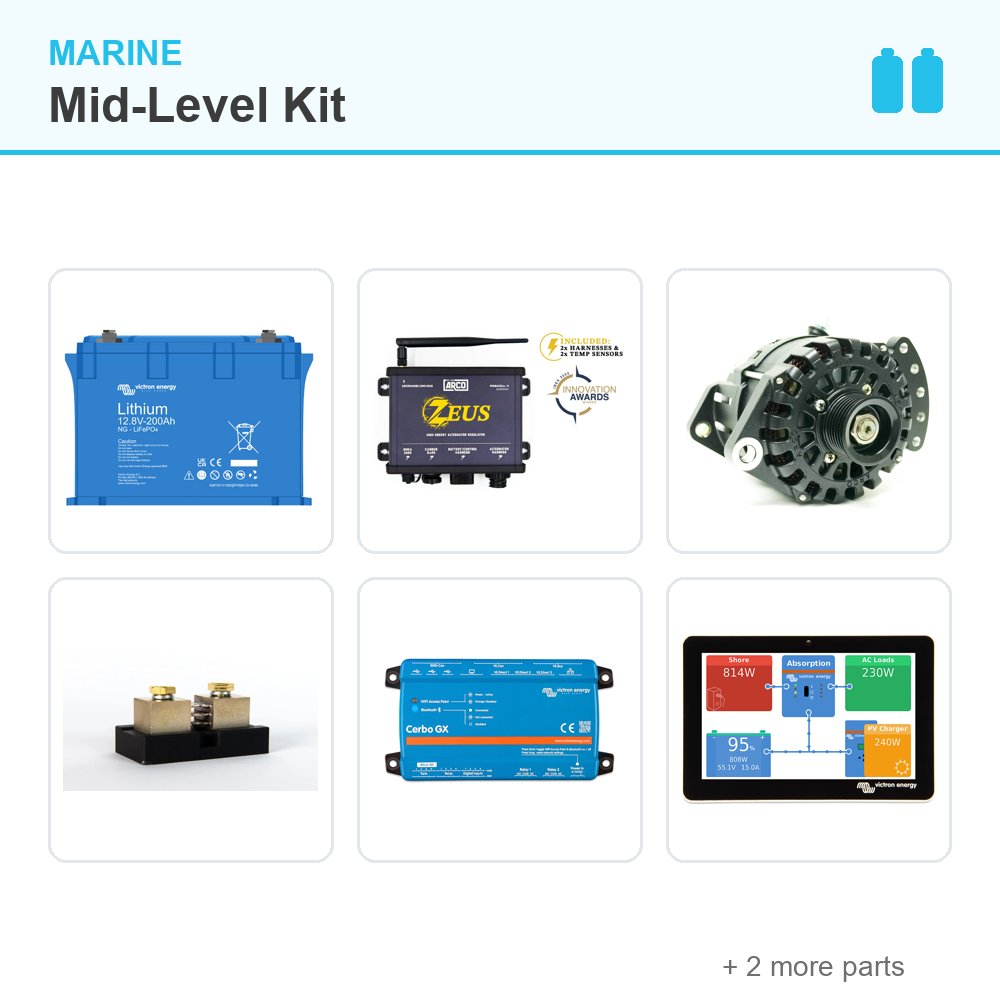
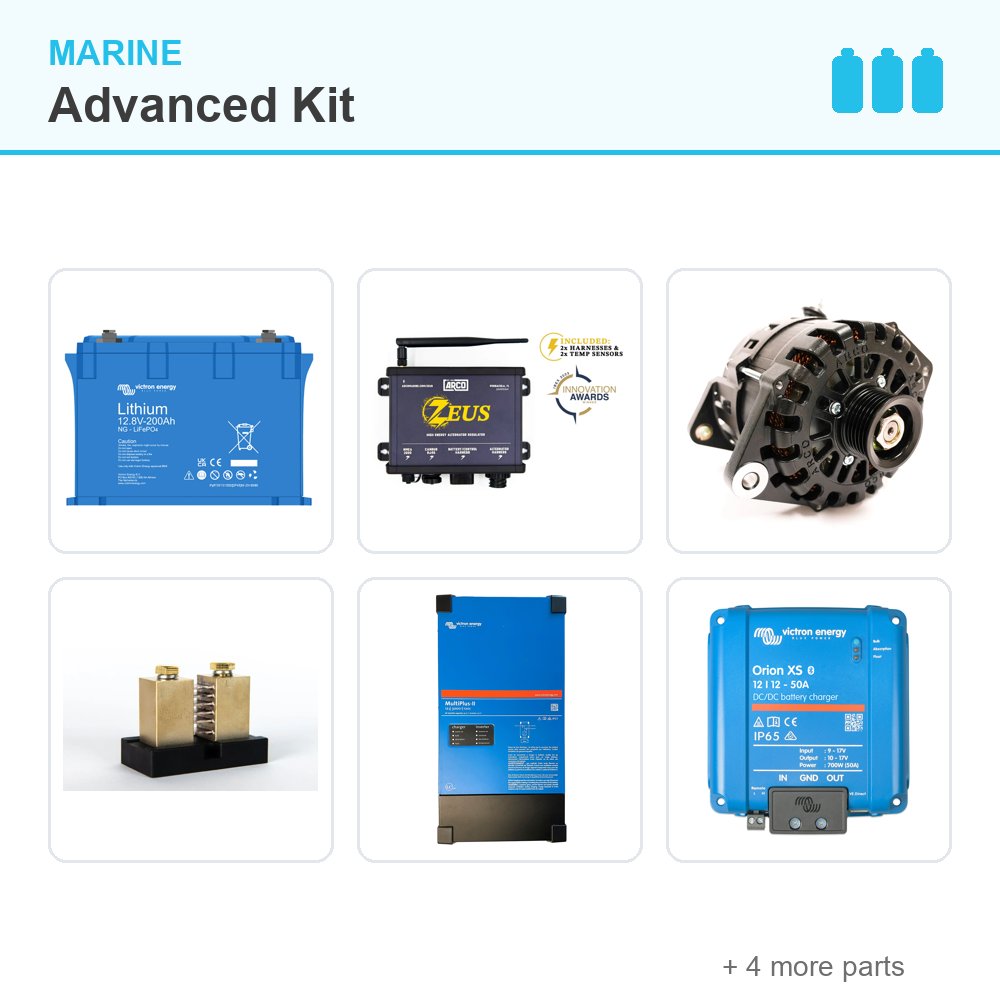
Shore power, solar, and alternator charging through a smart regulator such as the ARCO Zeus.
Monitoring
A Victron BMV-702 at starter level; Cerbo GX with a GX Touch display on larger systems.
Protection
Battery management and a BatteryProtect disconnect are in every kit; fuses and busbars are not (sized to your installation).
Which kit level do I need?
Battery Bank
2 × 12V 200Ah NG
3 × 12V 200Ah NG
4 × 12V 200Ah NG
Charging
No charger included – needs a lithium-ready charger on board
ARCO Zeus regulator + A225s alternator + ST500 shunt
ARCO Zeus + A275L alternator + ST1000 shunt
AC Power
—
—
MultiPlus-II 3000 (an Orion XS DC-DC charger is also included)
Solar Panels
Not included
Not included
Not included
Solar Controller
Optional add-on
Optional add-on
Optional add-on
Monitoring
BMV-702
Cerbo GX + GX Touch 50
Cerbo GX + GX Touch 70
Electrical
SmallBMS NG + BatteryProtect
Lynx Smart BMS 500 NG + BatteryProtect
Lynx Smart BMS 500 NG + BatteryProtect
Best For
Weekend cruising and fishing, light use
Coastal cruising, daily use
Liveaboard and long-range cruising
Solar panels are not included in the kits; we can supply them with your system.
Find your marine system
Every kit can go straight into your cart. On a boat, the alternator, regulator and batteries have to work together, so if you are not sure a kit fits your boat, start with the Power Guide or ask a power professional for a free review before you order.
Frequently asked questions
Usually yes, and it is our most popular marine upgrade — but it is a system change, not a battery swap. Charging sources (alternator, shore charger, solar controller) all need lithium-compatible profiles, and the bank needs proper battery management and protection. We review the whole system before recommending anything.
That is exactly what these systems are for. A correctly sized lithium bank with solar keeps refrigeration, lighting and electronics running at anchor; the engine or shore power tops the bank back up when you move.
Yes — without one you are guessing. A shunt-based monitor measures current in and out so you know real state of charge rather than voltage, which is misleading on lithium.
Because a bigger bank you cannot refill just cycles half-empty. On a boat the engine is often the fastest charging source available, but a stock alternator cannot safely charge lithium at full output for long. That is why the mid-level path adds external regulation rather than simply more batteries — storage, charging and loads have to be sized together.
Outboard boat? The ARCO alternators in the Mid-Level and Advanced kits fit inboard engines only. For outboards, the Marine Starter Kit plus an Orion XS DC-DC charger is the match.
Read next
Upgrading a boat you already own?
Before changing hardware, work through what the upgrade actually touches — loads, bank sizing, recharging, monitoring, solar, and protection.
Is charging the thing holding your system back?
A bigger bank only helps if you can refill it. What the Marine Charging Upgrade changes, and who it is for.